

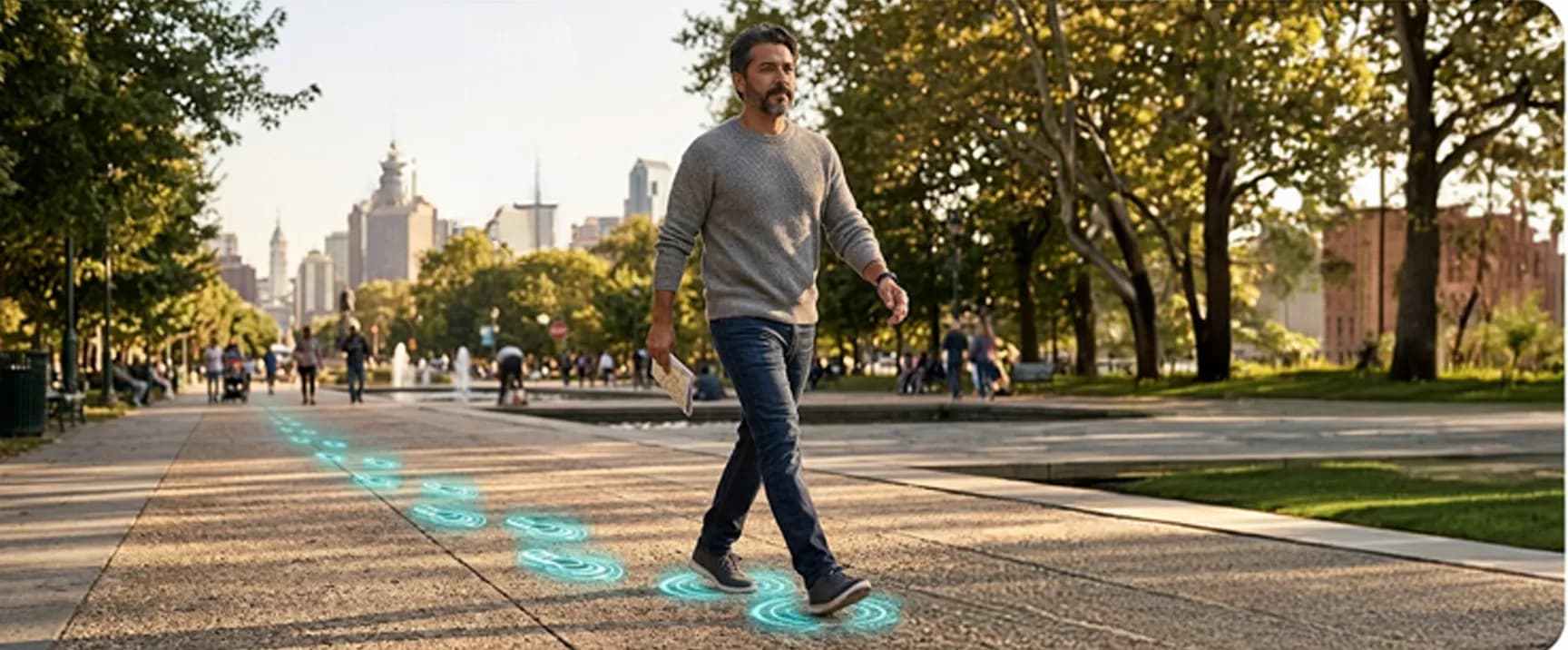
THE STANDARD · GROUND_TRUTH™
Ground_Truth™: a measurement you can check.
Every number in a health record came from somewhere. Most of them cannot tell you where. Ground_Truth™ is our name for a measurement that can account for itself: one that carries proof of who it came from, what took it, when, and under what conditions. That does not make it perfect. It makes it checkable, which is more useful.
One is the standard. The other builds it.
| Ground_Truth™ | The standard. What a measurement has to carry before we will trust it, and what we refuse to claim about it. |
|---|---|
| Bio_Sole | What produces it: the company, the smart insole, and the architecture behind it. |
In practice: Bio_Sole is a smart insole that slips into an ordinary shoe and reads how a person stands, bears weight and moves. It confirms who they are on the device itself, and sends out a single-use, time-stamped proof that a verified person was present: a yes or a no. Ground_Truth™ is the rule that measurement has to satisfy before we will put our name to it.
What a Ground_Truth™ measurement carries.
Four things, attached at the moment the measurement is taken and never bolted on afterwards.
Who it came from
A verified identity, confirmed at the source.
What took it
The instrument that produced the reading.
When
A timestamp, fixed at capture.
Under what conditions
The circumstances the reading was taken in.
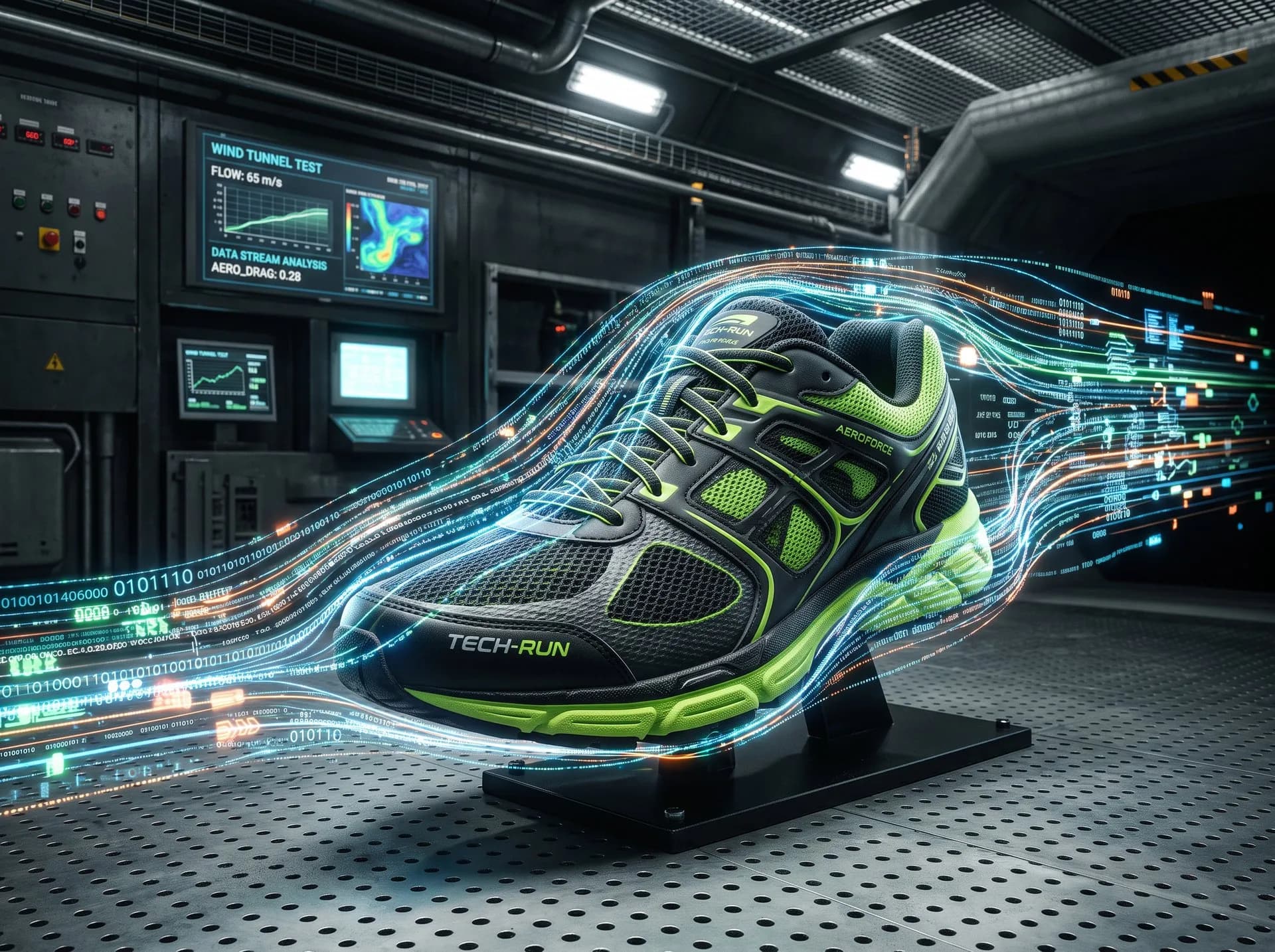
Bind those four at the source and the measurement can be checked later by somebody who was not there. Leave them out and you are trusting a stranger's arithmetic.
What the definition does not say.
It does not say the measurement is right. No instrument is. Every one of them gives you an estimate with an error attached, ours included. What ours gives you is attribution: whose, what, when, and provable afterwards. Attribution is the rare part. Almost nobody has it.
The order matters, and it runs one way.
i · IDENTITY
Know who a measurement came from.
ii · GROUND_TRUTH™
Then it can be checked, so it can be trusted.
iii · TRUSTED DATA
Then something can be learned from it, and better decisions follow.
It does not work backwards. Intelligence does not manufacture trust, and no model turns a number of unknown origin into one you can rely on. Trying is the exact mistake this standard exists to prevent. So identity comes first: not because it sounds rigorous, but because nothing after it survives without it.
Whoever you are, it is the same question.
An insurer asks
Is this really the person on the claim?
A clinician asks
Can I rely on what this is telling me?
A regulator asks
Show me your evidence.
An investor asks
What stops somebody else doing this?
Someone wearing our insoles asks
Who else can see this?
Underneath, it is one question: can you prove it? What follows is our answer, and it is the same answer for all of you.
How far along we honestly are.
We will tell you which is which every time you ask. We would rather sound cautious now than be caught out later.
| Where it stands | What that covers |
|---|---|
| Working today | Identity confirmed on the device. Measurement with a record of custody. Records that carry their own provenance. Verification repeated at every interaction. |
| Where we are going | Long baselines built across many people, and everything that becomes possible once those exist. That is where we are going rather than where we are standing. |
Known, Not Shown.
None of this should cost you your privacy to satisfy. So the identity that anchors every measurement is confirmed inside your own shoe, and it stays there.
What leaves
A single-use, time-stamped proof that a verified person was present. Nothing about your body travels with it.
What does not exist
There is no biometric database. Not one we guard carefully: one that does not exist. Nothing to breach, nothing to sell, nothing to hand over when somebody asks. We call this Known, Not Shown.
What we will not say.
The restraints are the part worth reading, because anyone can list what their technology does.
No clinical conclusions. We do not diagnose, treat or predict disease. We describe movement, and we note a change from your own baseline. Deviation, not diagnosis.
No unearned certifications. We do not claim one we have not finished earning.
No unsourced figures. We do not publish a number we cannot source.
No claim of objective reality. No instrument delivers that, and nothing we claim reaches further than the evidence we hold for it.
Three tests, before any model touches anybody's data.
Not a review we run when someone asks. Three conditions a model has to meet before it is allowed to run at all.
| Auditable | The record of what it did exists, and somebody outside this company can check it. |
|---|---|
| Inspectable | It can be opened and looked at rather than taken on faith. |
| Explainable | Any decision it makes can be given a reason you can follow. |
Any time that I use AI, it has to be inspected. It has to be explainable.
Who builds it.
Bio_Sole is the platform behind the standard: the smart insole, the chip inside it, and the architecture around both.
Made in the United States
The insoles are made in the United States by Atlantic Footcare, a Bio_Sole subsidiary.
Hosted in Canada
The data infrastructure is designed separately from the device, and hosted in Canada.
The standard came first
We wrote it before we built the thing, which was deliberate. It is far easier to decide what you will not claim before you have something to sell.
Why we publish it.
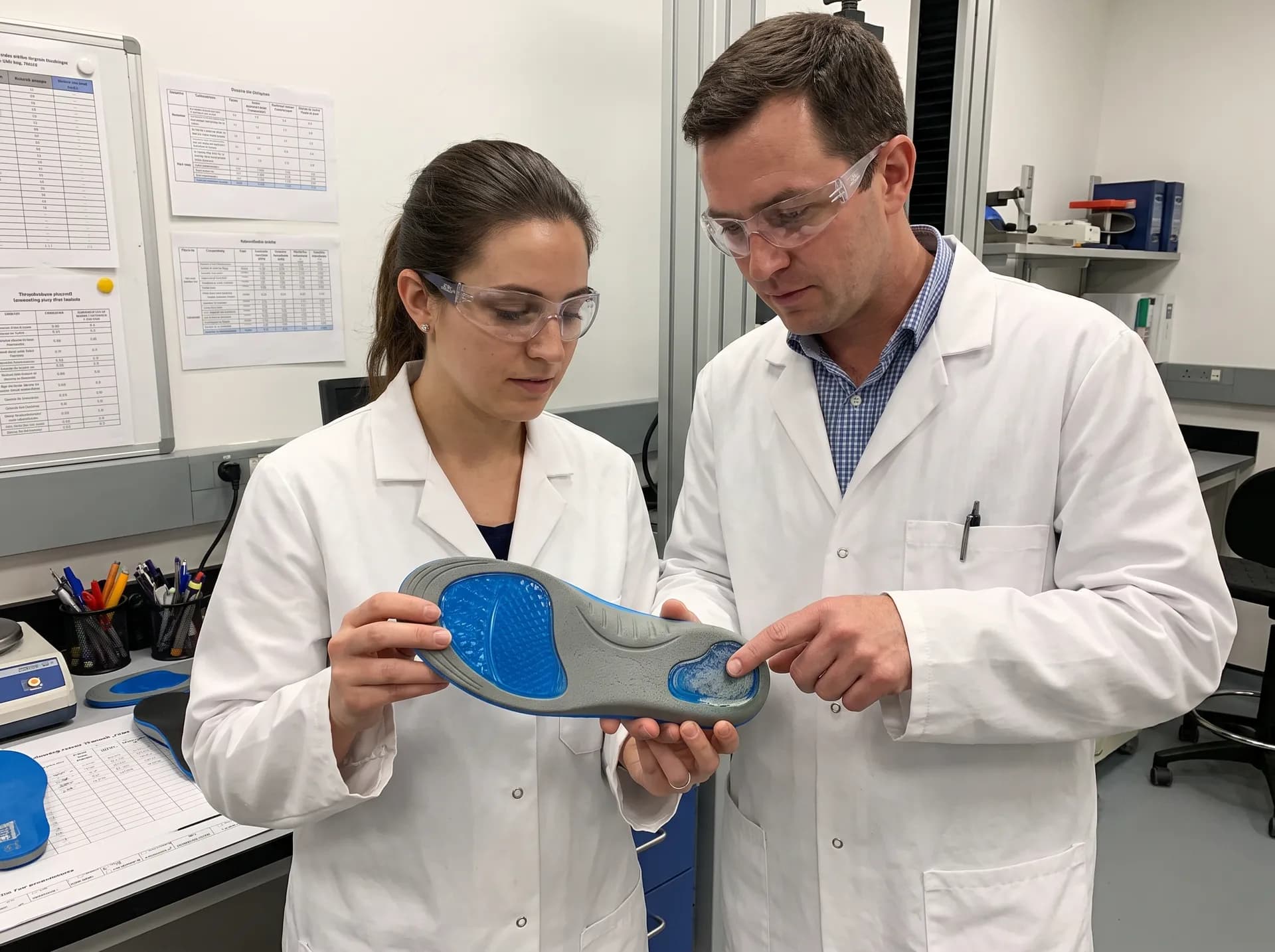
A standard nobody outside the company can read is just a preference. Publishing it costs us the freedom to say whatever suits us later, and that is the point of publishing it. It gives you something to hold us to that does not depend on trusting us first.
The architecture, drawn out
The same standard as one diagram: one identity domain attesting to every governed domain that inherits from it, with what is inspectable and auditable marked on the drawing.
Tested out loud
If you would rather watch it tested than read it asserted, that is what the podcast is for.
Questions people ask us.
What is Ground_Truth™?
A measurement that can account for itself. It carries four things from the moment it is taken: who it came from, what took it, when, and under what conditions, so it can be checked later rather than assumed. It does not claim to be perfect. It claims to be checkable.
What is the difference between Ground_Truth™ and Bio_Sole?
Ground_Truth™ is the standard: what a measurement has to carry before we will trust it, and what we refuse to claim about it. Bio_Sole is what produces it, meaning the company, the smart insole, and the architecture behind it.
Why does identity come first?
Because a measurement that cannot say whose it is cannot be trusted, and no software turns a number of unknown origin into a reliable one. Identity is confirmed first, and everything after it inherits that.
Where is the biometric kept?
Inside the person's own shoe, on their own device. It is never stored as an image or a template anywhere else, and no biometric database exists. What leaves is a single-use, time-stamped proof that a verified person was present. We call this Known, Not Shown.
Can the system be audited?
Yes. Every model must pass three tests before it runs: auditable, meaning the record exists and an outside party can check it; inspectable, meaning it can be opened and examined; and explainable, meaning any decision can be given a reason a person can follow.
Does the standard allow health claims?
No. Bio_Sole is a general wellness product. It does not diagnose, treat, or predict disease. It describes movement and notes a change from a person's own baseline: deviation, not diagnosis.
Put the standard to the test.
If a claim on this page does not hold up, or you want to see the standard applied to a case of your own, tell us. We would rather hear where it breaks than where it holds.
To learn more, check out our podcast.
Ground_Truth™ is also our podcast: a company asking itself the hard questions in public, with guests who have no reason to be gentle. Hear the standard tested in the open in Season One. It is being made now, and it lands here when it is ready and not before - which is the same rule the rest of this page runs on.