

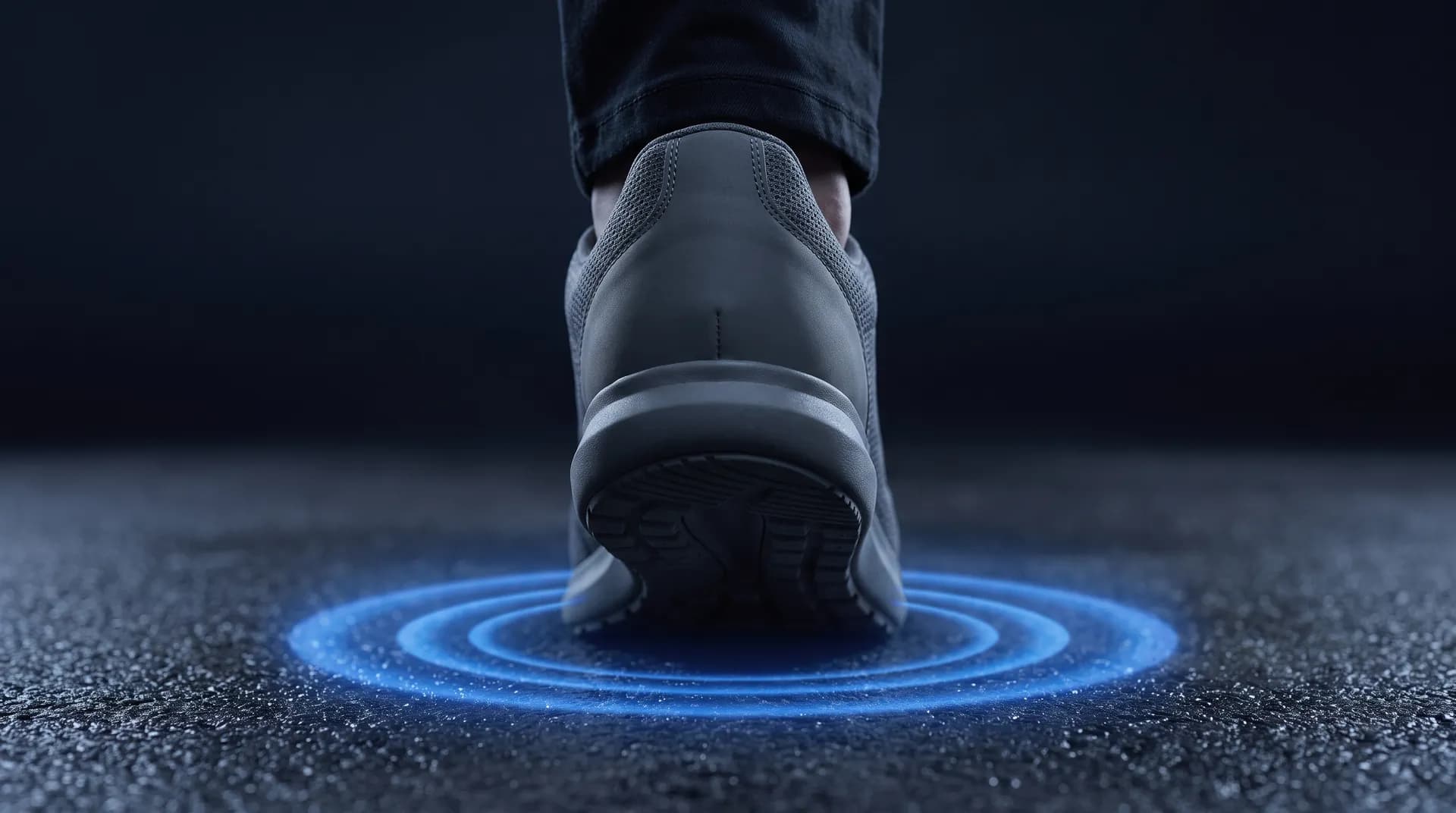
THE PRODUCT · GROUND_TRUTH™
A smart insole, and an ordinary shoe.
Bio_Sole is a sensor insole that slips into a shoe the wearer already owns. It reads how they stand, bear weight and move, and it confirms that they are who they say they are with every step. The reading happens in the insole and stays in the insole. Your systems receive a yes or a no.
KEY FACTS
An ordinary shoe
No special footwear required
The walk
Pressure and motion, never a picture
Every step
Confirms continuously, not once at a door
Nothing held
Your systems get a yes or a no
What Bio_Sole is.
A signature written by the whole body.
A smart insole that slips into an ordinary shoe and reads the way a person stands, bears weight, and moves. A walk is a signature written by the whole body — bones, soft tissue, habits, history.
It cannot be photographed, lifted from a glass, or replayed by software, because it is never stored as an image of anyone, anywhere.
How it works, in three steps.
Fit it
The insole goes into a shoe the wearer already owns, the way any insole does.
Enroll once
A short walk teaches the insole its owner. That signature is stored inside the device and bound to them.
Walk
From then on it confirms the wearer step after step, and answers any system that asks with a signed yes or no.
Known, not shown.
The insole confirms the person at the source, in their own shoe, with every step. The biometric never leaves the device. Your systems receive a yes or a no. We call this Known, Not Shown.
Specifications.
| SPECIFICATION | VALUE |
|---|---|
| Form factor | Insole. Fits inside an ordinary shoe; no special footwear required. |
| What it senses | Pressure across the sole, and motion of the foot through the step. |
| Reading density | More than 50,000 separate readings in 10 seconds of walking. |
| Identity method | Gait biometric, matched on the device against the signature enrolled to its owner. |
| Authentication mode | Continuous. Confirmed step after step, not once at a checkpoint. |
| Where the biometric lives | In a secured store inside the insole. It never leaves the device, and no copy exists elsewhere, ours included. |
| What it sends out | A signed yes or no. Optionally, movement features the wearer has consented to share. |
| Consent control | Set at enrollment by the wearer, and revocable at any time. |
| Connectivity | Bluetooth relay to the wearer's own phone, for consented movement features only. |
| Bluetooth version, range and pairing | To be confirmed |
| Sizes | To be confirmed |
| Battery and charging | To be confirmed |
| Materials and durability | To be confirmed |
| Regulatory position | Positioned as a general wellness product. It does not diagnose, treat, cure, mitigate or prevent any disease or medical condition. |
Four rows still read “To be confirmed”. The connectivity detail, the sizes, the battery and charging, and the materials and durability are with engineering, and they will be published here when the figures are final. We would rather leave the row visible than fill it with an estimate.
What that architecture means for your organization.
Continuous authentication, not one-and-done.
The identity question is answered throughout the life of a policy, a claim, or a shift, not once at intake.
Workforce authentication where it matters.
In high-security environments, the credential is the person, so a badge passed hand to hand stops working. For workplace insurers and boards, knowing who was actually on site is the beginning of every honest file.
No biometric custody.
Your organization never holds a face, a print, or a template. There is no honeypot to breach, no biometric database to defend, and a far smaller privacy surface as regulation keeps moving in exactly this direction. The strongest data protection posture is not holding the data at all.
Consent people can actually give.
Because nothing personal is surrendered, participation asks less of the insured. Programs get built on a yes that is easy to say and easy to withdraw.
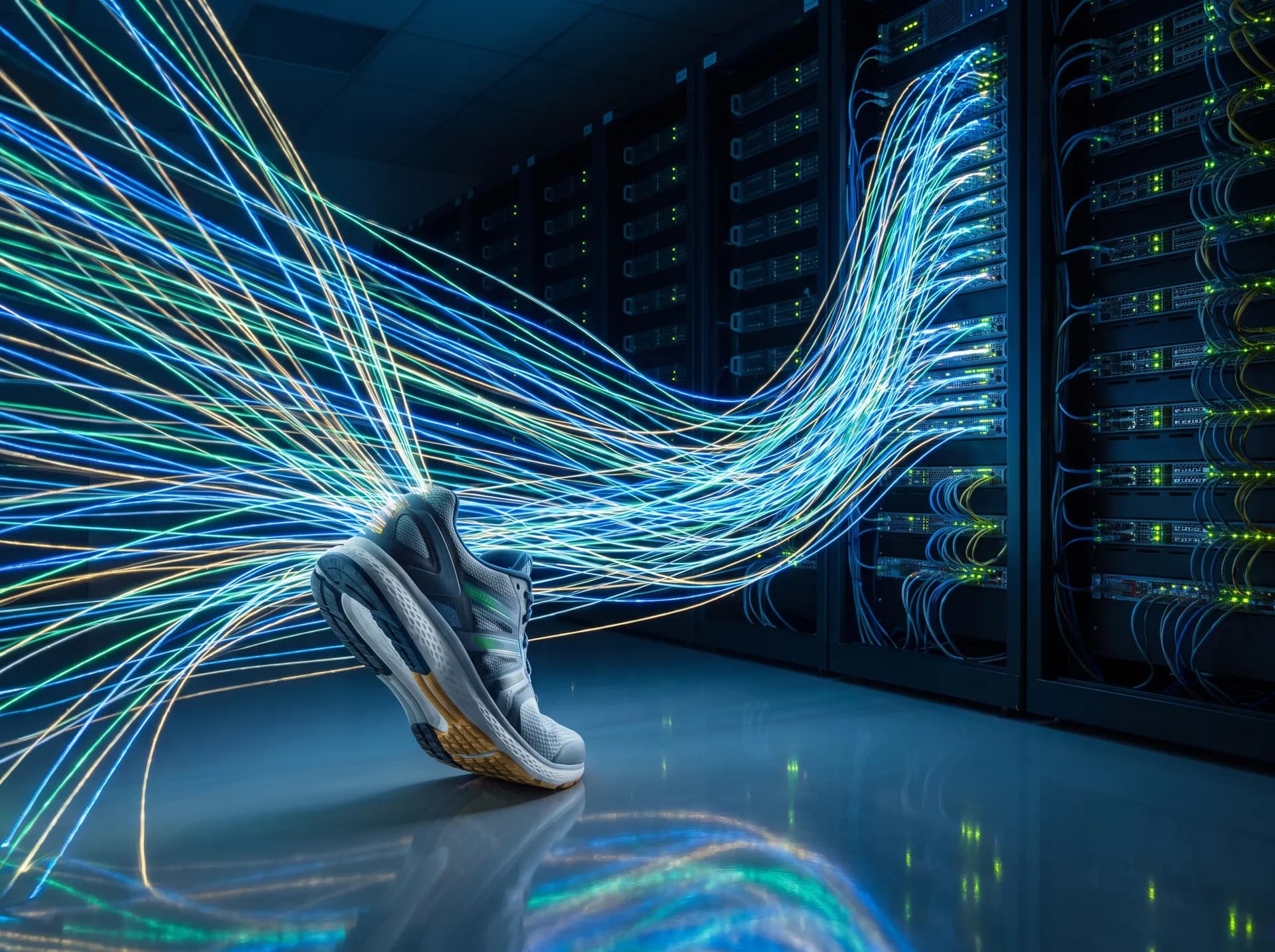
Ask about the hardware.
Fit, battery, durability, what it feels like in an ordinary shoe - if the spec sheet left something out, ask us directly.
Questions people ask us.
What is Bio_Sole?
A smart insole that fits into an ordinary shoe and confirms who the wearer is by the way they walk. It reads pressure and motion at the sole, matches that against the signature enrolled to its owner, and answers other systems with a yes or a no.
Does Bio_Sole need a special shoe?
No. It goes into a shoe the wearer already owns, like any other insole. Nothing about the shoe has to change.
What does the insole measure?
Pressure across the sole and motion of the foot through each step — more than 50,000 separate readings in 10 seconds of walking. It does not record images, sound or location.
Where is the biometric stored?
Inside the insole, in a secured store on the device. It never leaves, and there is no copy in any database, ours included.
What do outside systems receive?
A signed yes or no, and nothing else. They never hold a biometric, so there is nothing about the wearer for them to lose or leak.
Can a walk be copied the way a badge or a password can?
No. A badge can be handed over and a password can be shared, but a walk is produced by the whole body and is never stored as an image, so there is nothing to photograph, lift or replay. If someone else puts on the shoe, the match stops.